


At Tilsatec, we regularly speak to safety professionals who are still navigating the transition from the older EN388 cut ratings (1-5) to the newer ISO 13997 A–F scale. With modern engineered yarns dramatically changing glove performance, understanding the difference matters more than ever.
In this guide, we’ll break down every part of the EN388 mechanical protection standard, with a special focus on cut resistance and the ISO 13997 test method.
What Is EN388:2016+A1:2018?
EN388 is the European standard used to test protective gloves against mechanical risks including:
- Abrasion
- Blade cuts
- Tearing
- Puncture
- Impact protection (optional)
The standard was updated to improve the accuracy of cut resistance testing by introducing a new test method (EN ISO 13997). This was particularly important as modern high performance fibres became more widely used and began blunting the test blades affecting the reliability of results.
Each character represents a different performance category.
Breaking Down the EN388 Rating System
1. Abrasion Resistance (First Number)
This measures how well the glove withstands surface wear from rubbing and friction.

Higher scores indicate greater durability in abrasive environments such as construction, engineering and materials handling.
2. Circular Blade Cut Test (Second Number)
This is the original EN388 “Coup Test”.
A rotating circular blade moves back and forth across the glove material under constant force until cut-through occurs. The result is scored from 1–5.

However, modern cut resistant fibres like steel, glass fibre and engineered yarns can blunt the blade during testing, creating artificially high scores.
That’s exactly why ISO 13997 was introduced.
Where the Coup Test is considered unreliable because the blade dulls, the result is replaced with an “X”.
The ISO 13997 Cut Test: The Most Important Change in EN388
The ISO 13997 test, often called the TDM test was introduced to provide a far more realistic assessment of cut protection in industrial environments.
Unlike the older rotating blade method, ISO 13997 uses:
- A straight blade
- A single cutting stroke
- Variable force levels
- Fresh blades for every test
The test measures how much force is required to cut through the glove material over a 20mm blade travel.
The final performance is classified using a letter scale from A–F.
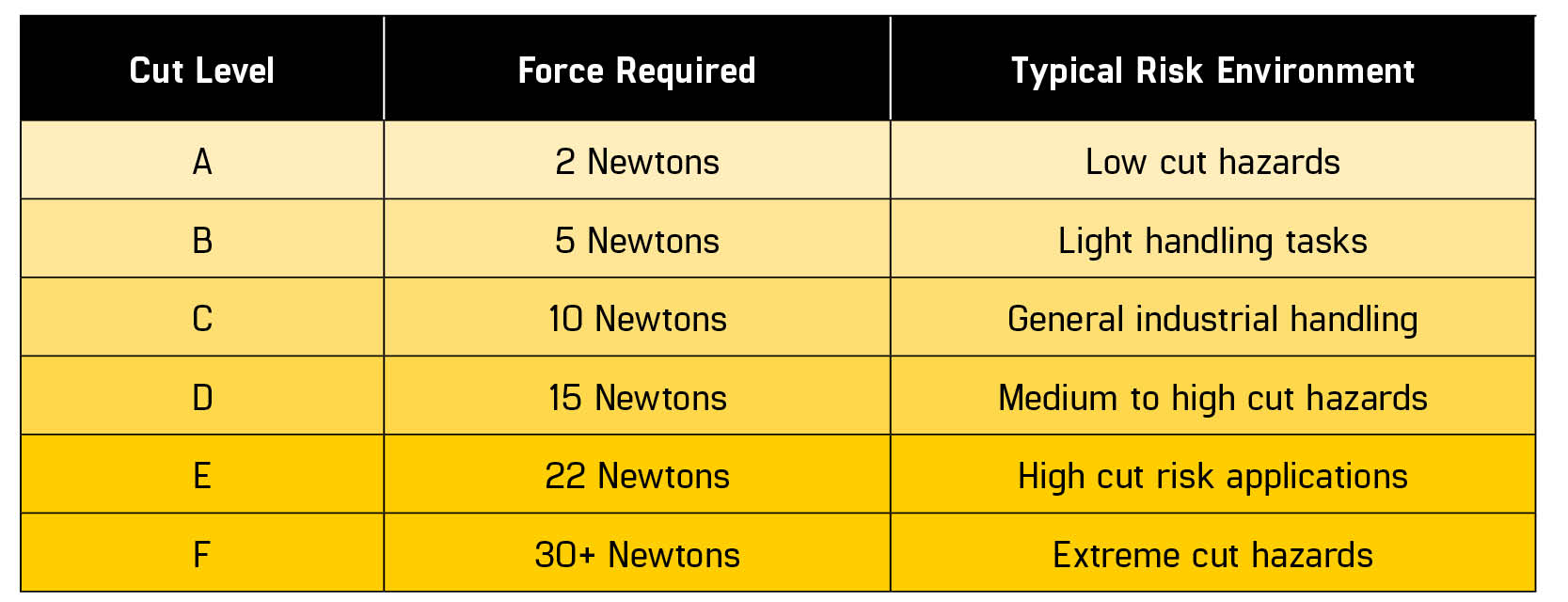
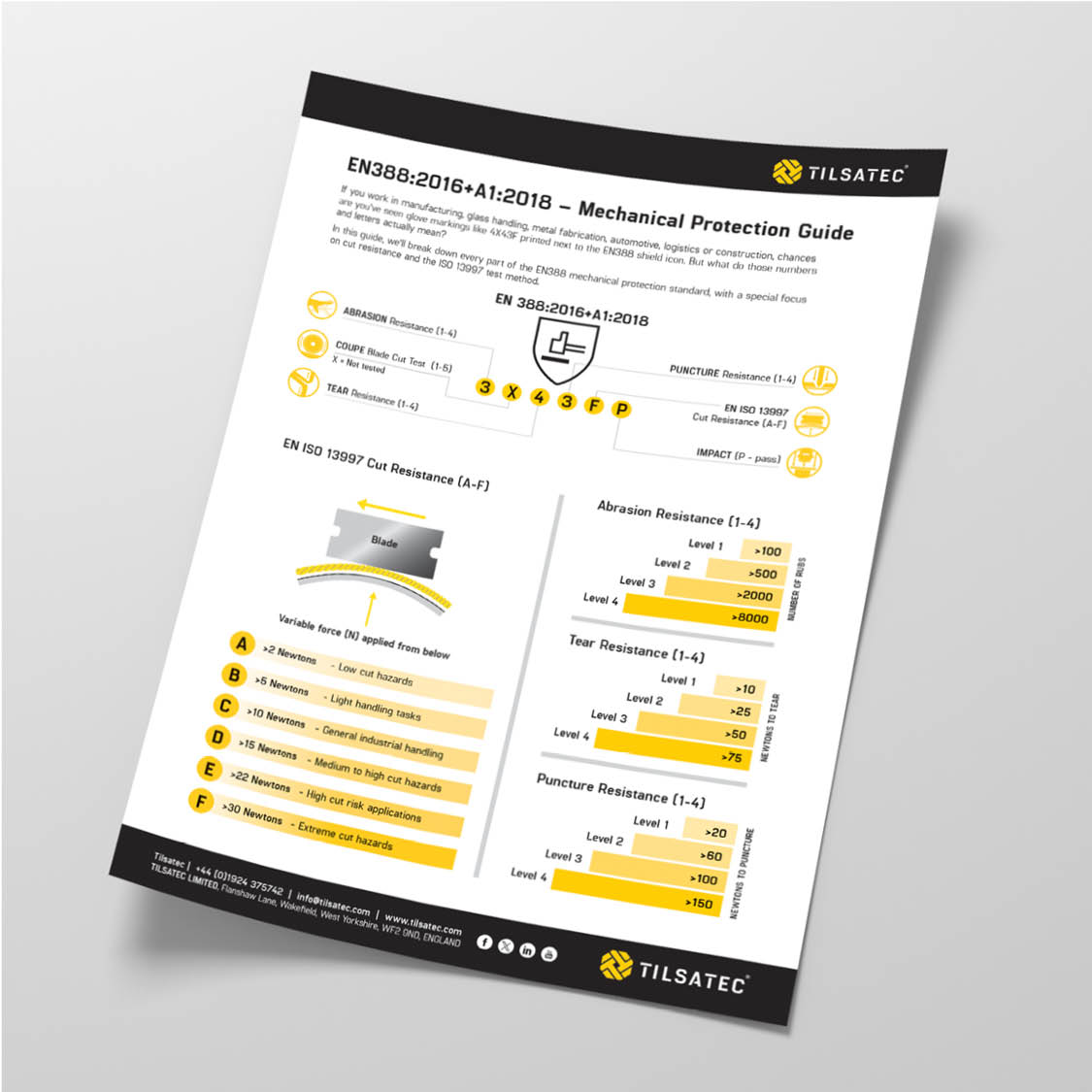
Download our handy cheat sheet below so you can always refer back to it whenever you need a reminder of these key performance indicators.
Why ISO 13997 Matters in Real Workplaces
The older Coup Test worked reasonably well for lightweight materials and lower risk tasks.
But today’s workplaces increasingly involve:
- Sharp sheet metal
- Glass handling
- Stamping operations
- Automotive presswork
- Recycling environments
- Heavy fabrication
These hazards involve higher pressure and more aggressive cutting forces.
ISO 13997 better replicates those conditions because it measures actual force-to-cut rather than relying on repeated blade cycles.
Common Misunderstanding: “Level 5” vs “Level F”
One of the biggest sources of confusion is assuming:
“Cut Level 5” equals “Cut Level F”
It doesn’t.
The old 1–5 Coup Test and the newer A–F ISO 13997 ratings use fundamentally completely different test methods and are not directly compareable.
A glove may perform well in one test and differently in the other, which iswhy many safety professionals now prioritise the ISO 13997 letter rating when assessing higher-risk cut hazards.
3. Tear Resistance (Third Number)
This measures how much force is required to tear the glove material once a cut or snag has started.

Higher tear resistance is especially important in heavy handling applications where gloves may snag on edges or machinery.
4. Puncture Resistance (Fourth Number)
This test measures resistance against puncture from a standard stylus point.

It’s important to note:
This is not a needle-stick test. EN388 puncture ratings do not indicate protection against hypodermic needles or ultra-fine sharps.
5. Impact Protection (Optional “P” Rating)
Some gloves also include a rating for impact protection.
If the glove is tested for impact and meets the required performance criteria, an additional “P” is applied to the end of the EN 388 classification.
Example:
EN388: 4×43FP
This indicates tested protection against impacts to the back of the hand and knuckle area.
How to Choose the Right Cut Level
Selecting the correct cut resistance should always be based on:
- The specific task
- Material sharpness
- Contact force
- Frequency of exposure
- Dexterity requirements
Higher cut resistance is not automatically better.
Over-specifying gloves can reduce:
- Comfort
- Dexterity
- Productivity
- User compliance
The goal is to achieve the safest balance between protection and usability.
Quick EN388 Example Explained
EN388:2016+A1:2018 – 4×43F
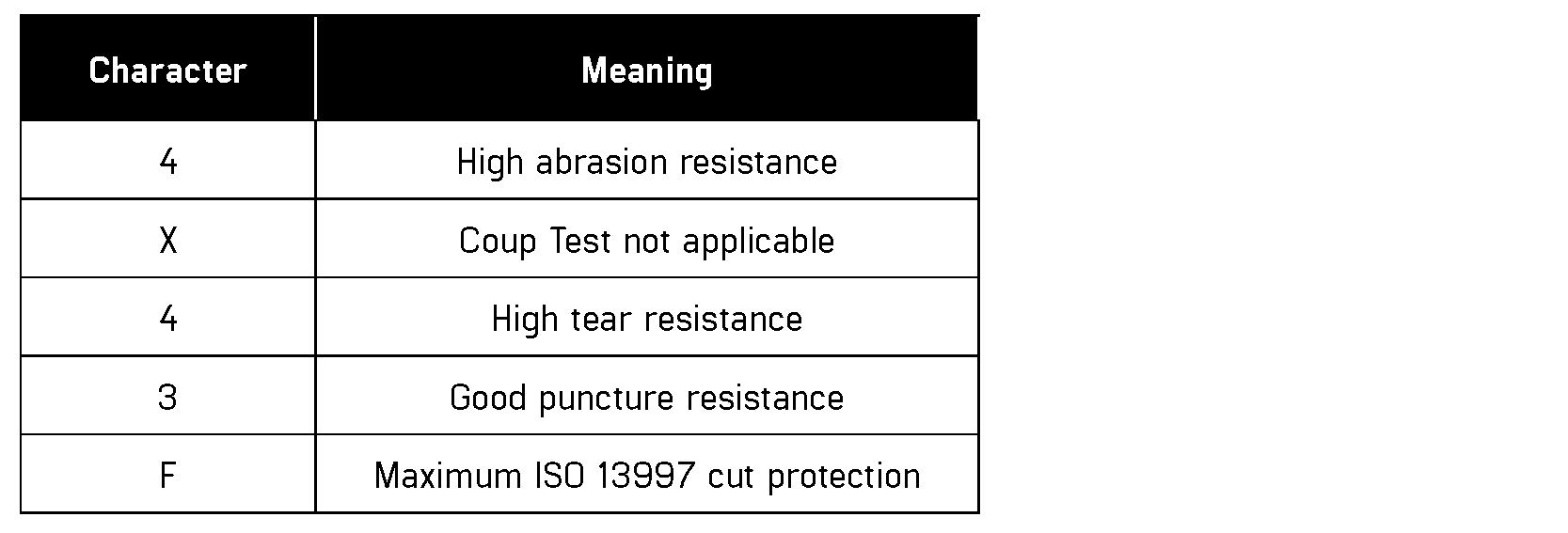
This would typically suit extremely high cut risk environments such as heavy metal fabrication or glass processing.
When looking to improve hand protection in your workplace, selecting gloves that meet EN388:2016 standards is essential. Find out more about our coated cut resistant gloves range and discover how we can help keep your team safe and compliant.